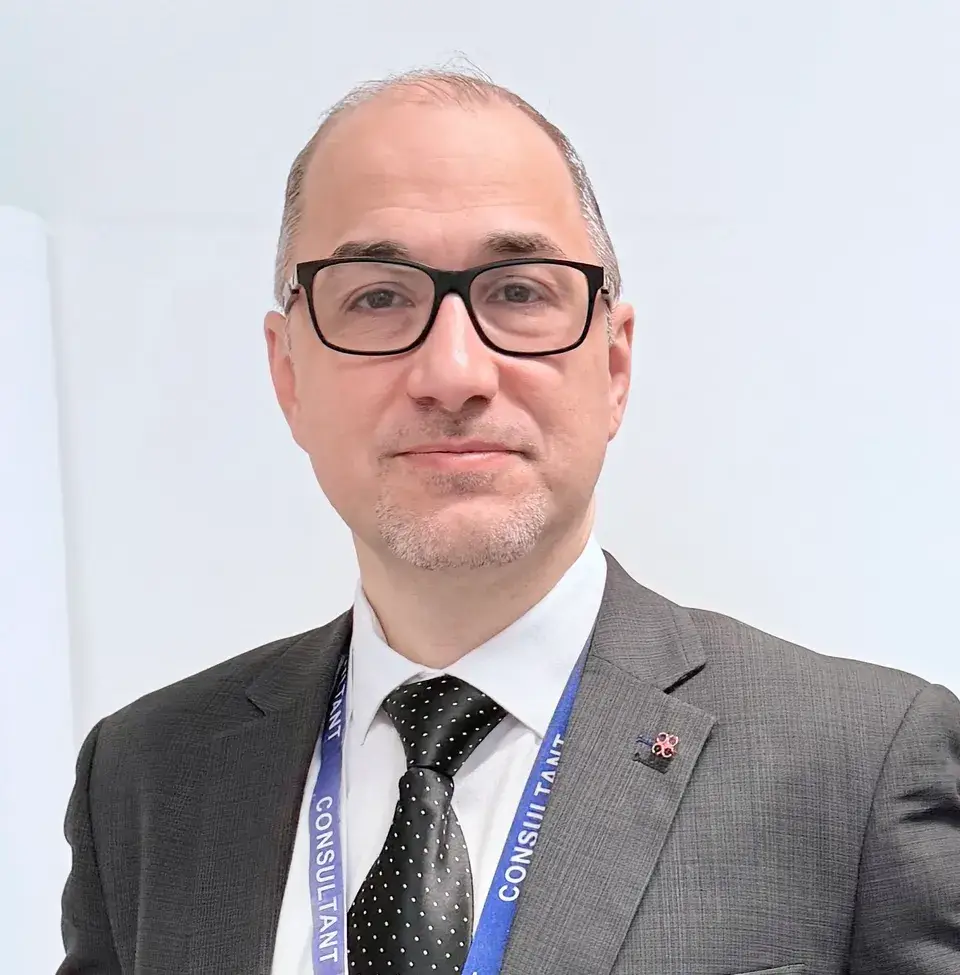



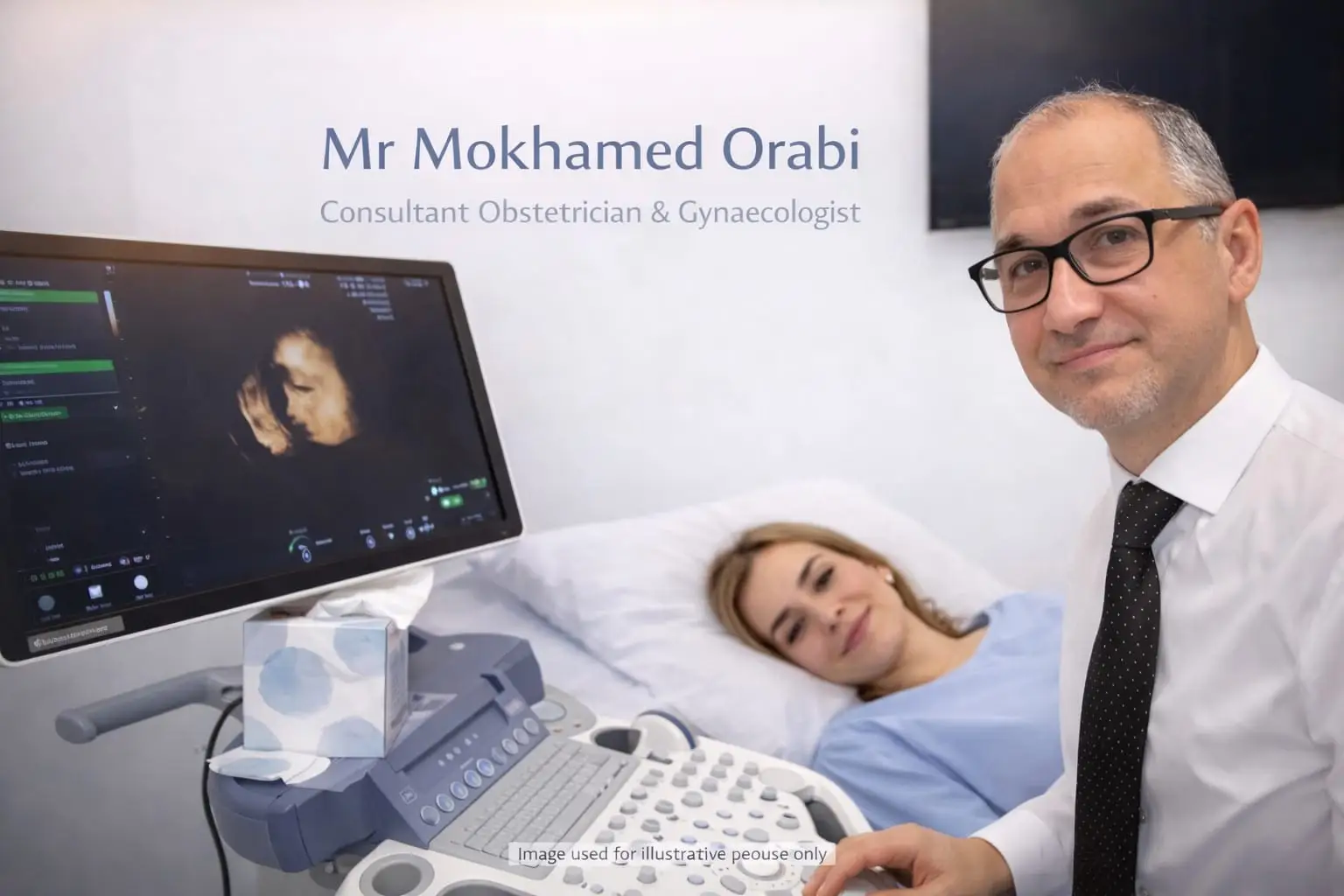
Mr Orabi listens to each woman's individual concerns and tailors treatment options to her preferences, health background and goals.
With training across several international centres, he is experienced in both open and minimally invasive (keyhole) surgery, offering modern, safe and effective options.
Patients describe his calm manner, clear explanations and empathetic approach, which help make care feel reassuring.
As a trainer, clinical supervisor and contributor to research, he bases clinical decisions on current guidelines and best practice.
WhatsApp us
Keyhole investigation of the pelvic and abdominal organs through a small camera, used to diagnose and often treat conditions such as endometriosis, pelvic pain and ovarian cysts. Through one to three small cuts, the abdomen is gently inflated so the camera and instruments can be passed, and biopsies or minor treatments carried out if needed. Most women are back to normal within a few days and avoid heavy activity for one to two weeks. Smaller scars and a quicker recovery than open surgery.
Investigating pelvic pain, fertility issues, abnormal bleeding, or suspected endometriosis.
1–3 small cuts, abdomen inflated with gas, camera inserted, biopsies or minor treatments if needed. Cuts are closed with dissolvable stitches or glue.
Back to normal in a few days; avoid heavy activity for 1–2 weeks. Mild bloating, bruising, or shoulder pain are common.
Rare complications include infection, bleeding, or organ injury.
A short procedure that lets Mr Orabi look directly inside the womb using a slim camera, with no cuts needed. It is used to investigate heavy or abnormal bleeding, postmenopausal bleeding, polyps and fibroids. Available in the clinic under local anaesthetic, or at the hospital under general anaesthetic for more involved cases. Most women return to normal activities the same or next day.
Tell the doctor if it becomes too painful — the procedure can be stopped.
A close-up examination of the cervix using a magnifying instrument, with the option of treating abnormal cells in the same visit using a heated wire loop (LLETZ). A short procedure that removes the affected area for analysis and treatment. Light bleeding or cramping for a few days is common, and the cervix usually heals over a few weeks.
Most people can go back to normal activities straight after their colposcopy, including driving.
Wait until any bleeding has stopped before you:
You'll be invited for a follow-up test in 4–6 months to check that your cervical cells have returned to normal.
Surgical removal of fibroids while preserving the womb. A good option for women who would still like to have children, and for those who wish to keep their womb while relieving symptoms such as heavy bleeding or pelvic pressure. Recovery depends on the size and number of fibroids and the surgical approach, which Mr Orabi will discuss with you.
It helps with:
Specialist keyhole surgery to remove endometriosis at its root is widely regarded as the most thorough surgical approach, with the aim of long-term pain relief and protecting fertility. Mr Orabi removes the lesions rather than simply treating the surface, with the aim of reducing pain and improving quality of life.
Keyhole removal of the womb and cervix and, where indicated, the fallopian tubes and ovaries (BSO). Compared with open surgery, the keyhole approach usually means smaller scars, less pain and a quicker return to normal life. Mr Orabi will explain whether the ovaries are being removed and what this means for you, including any effect on hormones.
Because it is keyhole surgery, most people heal faster than with open surgery.
Specialist menopause and hormonal health care, with body-identical HRT, testosterone, vaginal oestrogen, non-hormone options and lifestyle support.
Mr Orabi offers an unhurried menopause review, tailoring body-identical HRT, testosterone and non-hormonal options to your symptoms, health history and preferences, with clear follow-up to fine-tune your plan.
Prompt assessment and urgent investigation of symptoms that could suggest a gynaecological cancer, with fast-track referral into specialist oncology care. Most women seen do not turn out to have cancer.
What it means if your cervical screening test detected HPV or showed cell changes, and how Mr Orabi's BSCCP-accredited colposcopy clinic follows that up.
Any vaginal bleeding 12 months or more after your last period. Always needs prompt investigation; most causes are benign, but it should never be ignored.
Thickening of the womb lining, sometimes with abnormal cells. Important to investigate, but usually treatable without surgery.
Blockage of the Bartholin gland, causing swelling at the entrance of the vagina. Usually treatable with drainage and, if recurrent, marsupialisation.
Conditions affecting the skin and tissues of the vulva, including itching, burning, soreness, skin changes and chronic pain.
Absent periods, either primary (periods never started) or secondary (periods have stopped). There is almost always an identifiable cause.
Pain in the lower abdomen or pelvis: short-term, recurrent, or lasting longer than six months. Always worth investigating.
Excessive or prolonged menstrual bleeding that affects daily life. Almost always treatable once the cause is identified.
Fluid-filled sacs that develop on the ovaries. Most are harmless and resolve on their own, but some need closer review.
Non-cancerous muscular growths in or on the womb. Very common in women of childbearing age. Most can be managed without surgery.
Tissue similar to the womb lining growing outside the womb (endometriosis) or within the womb muscle (adenomyosis). Common, benign and treatable.
Caesarean section is an operation where a baby is delivered through a cut in the tummy and womb. It's usually done just below the bikini line and takes about 40–50 minutes.
Hospital removal of endometrial polyps using hysteroscopy, often with the MyoSure tissue-removal system. A short, scar-free procedure to treat polyps that can cause heavy or abnormal bleeding, with a quick recovery.
Coil fitting or removal at the hospital under general anaesthetic. The right option where a previous attempt has been too painful, where the cervix is difficult to access, or where you would simply prefer to be asleep.
A short, gentle operation to empty the womb after an incomplete miscarriage or retained pregnancy tissue, or for certain other gynaecological reasons. Mr Orabi and his team provide this care sensitively and with support throughout.
A short reconstructive operation to relieve discomfort at the entrance of the vagina caused by tight or scarred tissue, which can make intercourse or examinations painful.
A targeted hormone profile and women's health blood work, organised in clinic with your results reviewed together at a follow-up appointment.
Fitting, reviewing and replacing vaginal pessaries for pelvic organ prolapse. A safe, effective and non-surgical option that helps many women manage symptoms comfortably.
A detailed scan of the womb, ovaries and pelvic structures was performed and interpreted in the clinic by Mr Orabi. Available abdominally or transvaginally, often on the same visit as your consultation, so you can discuss the findings straight away.
A small tissue sample from the vulva, taken under local anaesthetic in the clinic, to clarify the cause of skin changes, persistent itching or long-standing discomfort.
Conditions affecting the skin and tissues of the vulva.
A small tissue sample taken from the cervix, usually during a colposcopy, to clarify the cause of an abnormal smear or HPV result. Quick, well-tolerated, and the most reliable way to confirm what abnormal cells mean.
A short test to check the health of your cervix, including HPV testing and a sample of cervical cells. Quick, well-tolerated, and one of the most effective ways to detect early changes before they cause problems.
A test to detect HPV and early cell changes in the cervix.
A small sample of the womb lining is taken in the clinic to investigate heavy or abnormal bleeding or postmenopausal bleeding. Quick to perform and usually well tolerated, with results discussed at a follow-up appointment.
Hormonal coils (Mirena, Kyleena, Jaydess) or copper coils fitted in clinic under local anaesthetic where needed, with ultrasound guidance for accurate, comfortable placement. A quick appointment with a fast return to your day.
IUDs provide effective long-term contraception. Some types can also help with:
To help reduce discomfort:
You may experience mild cramping or light spotting for a few days. Pain relief such as paracetamol or ibuprofen can help.